Dry moss, preserved moss, and living moss compared for framed art
Understanding the three moss types for wall displays
When you start looking into framed moss art, you quickly discover that not all moss is the same. The three main categories you will come across are dry moss, preserved moss, and living moss. Each behaves differently, requires different care, and suits different spaces. Knowing what sets them apart helps you choose the right material for your project, whether you are building a piece yourself or selecting a ready-made display.
What dry moss is and where it works
Dry moss is exactly what it sounds like: moss that has been air-dried or kiln-dried so that all moisture is removed. It feels brittle to the touch and can crumble easily if handled roughly. Because it contains no water, it will not rot or grow mold, which sounds good at first. But dry moss is also fragile. Once it is fixed inside a frame, any bump or vibration can send little bits falling to the floor. Over time, the color fades to a dusty tan or grayish green, especially if the frame sits in direct light.
Dry moss does have a place. It works well in temporary displays or in projects where the frame will not be moved often. It is also a common choice for crafters who want a natural look without worrying about watering or humidity. But for a piece that is meant to last for years inside a home, dry moss is rarely the best option. It simply does not hold up to everyday life.
Preserved moss: the practical middle ground
Preserved moss is moss that has been treated with a glycerin-based solution and usually dyed to maintain or enhance its color. The treatment replaces the water inside the plant cells with a stable liquid that keeps the moss soft and flexible. It no longer grows, but it also does not die. The result is a material that looks and feels like living moss but requires no water, no light, and no ongoing care.
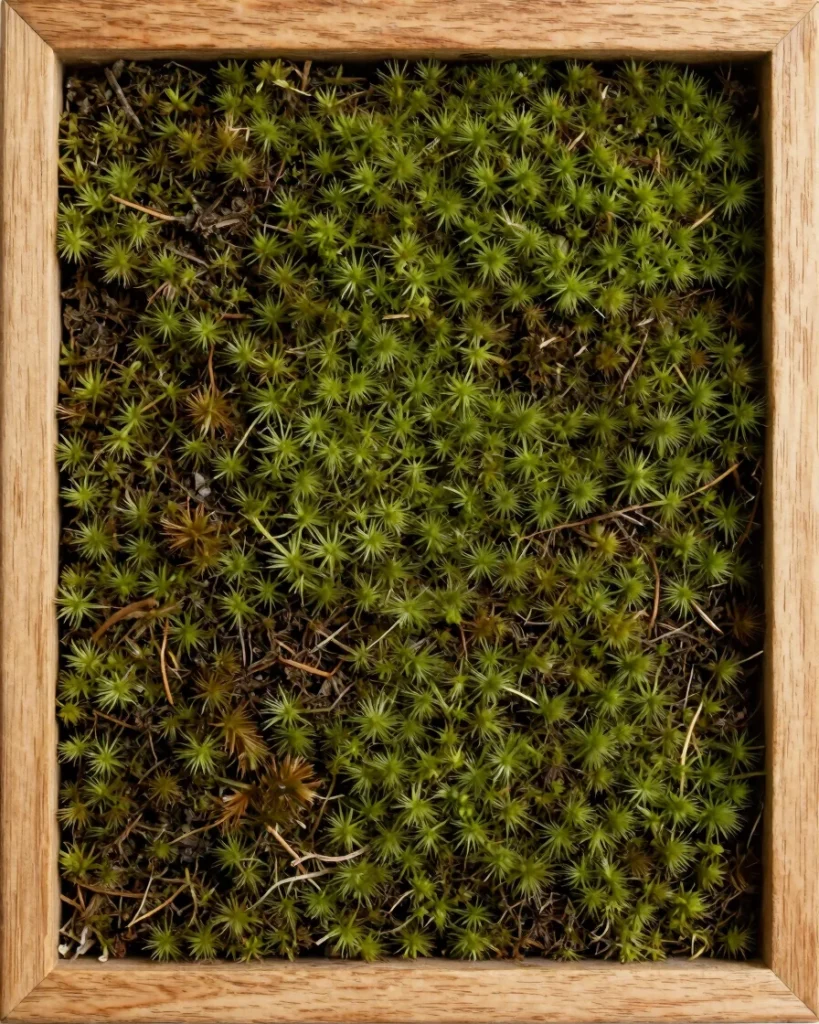
This is the moss you see most often in modern framed moss art. It stays green for years, does not shed, and resists pests. Because it is flexible, it can be shaped around letters, logos, or geometric patterns inside a wood frame without cracking. The color variation available is wide: from deep forest greens to bright lime, and even neutral tones like gray-green or olive. Sheet moss, cushion moss, and reindeer moss are all commonly preserved and used in these designs.
One thing to keep in mind is that preserved moss is not fully inert. It will react to very high humidity by feeling slightly damp, and in extremely dry air it may become a little stiff. But inside the typical range of an indoor environment, it stays stable. It also does not need to be sealed with glass, because it does not release spores or require airflow. That makes it ideal for open-front frames where you want the texture to be visible and touchable.
For anyone looking for a low-maintenance option that keeps its appearance for years, preserved moss is the most reliable choice. It offers the look of a living wall without the routines that living plants demand. That is why so much of the material sold as prepared moss for home displays uses preservation as its core method. The treatment gives the moss a long life while keeping it safe for use in living rooms, offices, and bedrooms.
Living moss: beautiful but demanding
Living moss is exactly what grows on forest floors, rocks, and tree trunks. It is alive, which means it needs light, water, and airflow to survive. In a closed frame, living moss will quickly die because the environment is too stagnant. To keep it healthy, you need an open or terrarium-style setup with ventilation, occasional misting, and indirect light. Even then, it can be tricky to maintain the right balance.
Living moss also brings along its own ecosystem. Tiny insects, spores, and soil organisms can hitch a ride into your home. While most are harmless, some people prefer not to introduce extra biology into their interior display. And because living moss grows slowly, it can change shape over time, shifting the design you originally arranged.
That said, living moss has a depth and vibrancy that preserved moss cannot fully replicate. The greens are richer, the texture changes with the light, and there is a sense of life that comes from something still growing. For someone who enjoys tending plants and wants a dynamic piece, living moss can be rewarding. It just asks for more attention than most people expect from a wall-mounted artwork.
How the frame material matters
The type of moss you choose influences the kind of frame you need. Dry moss is light and can be glued directly onto a backing board, so almost any wood frame works. Preserved moss is also light, but because it is thicker and more textured, you need a frame with enough depth to hold it without compressing the surface. A shallow frame can crush the moss and flatten the look you are going for.
Living moss, if you decide to go that route, requires a frame that allows airflow. Some people use mesh backs or open-sided frames. Others build a small terrarium box with a glass front and a gap at the top. The frame becomes part of the ecosystem, not just a border. That adds complexity and cost, but it can be part of the appeal if you enjoy the craft side of the project.
Surface texture and visual impact
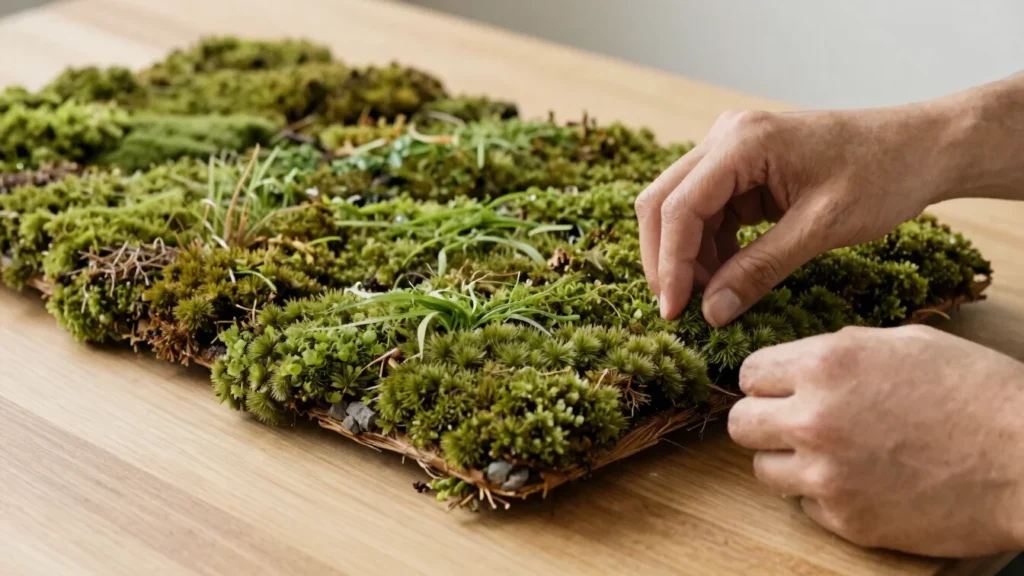
Moss texture varies a lot between types and even between batches of the same type. Sheet moss gives a flat, carpet-like surface that works well for backgrounds or large filled areas. Cushion moss forms small rounded clumps that add depth and a softer look. Reindeer moss, which is actually a lichen, has a branching, coral-like structure that stands out against smoother mosses. In framed moss art, combining these textures creates a layered effect that draws the eye.
Preserved moss holds these textures well because the treatment keeps the individual stems and leaves from collapsing. Dry moss tends to lose its fine details as it becomes brittle, and living moss can flatten out if it does not get enough light. For a piece that will hang on a wall and be viewed up close, preserved moss gives the most consistent texture over time.
Color is another factor. Dry moss fades to a muted palette that some people find natural and calming. Living moss shifts with its health: too much light turns it yellow, too little makes it dark and thin. Preserved moss offers stable color that does not change with the seasons or the weather. That predictability is valuable when you are designing a piece to match a specific room.
When each type suits your project
If you are building a temporary display or a craft project that does not need to last, dry moss is the cheapest and simplest option. Just be ready for some mess and a limited lifespan. If you want a piece that stays beautiful for years with no effort, preserved moss is the clear winner. It is the material behind most of the framed moss art you see in homes and offices, and it handles the conditions of an interior display better than the other two types.
Living moss is for the enthusiast who enjoys the process of care and wants a piece that changes over time. It is not a set-and-forget option, and it requires a frame design that supports life. But for someone who loves plants and wants to bring a slice of the outdoors inside in a literal way, it can be a satisfying project.
Most people end up choosing preserved moss because it balances appearance, durability, and ease. It gives you the green, organic look without the watering schedule or the brittleness. That is why the majority of what is sold as prepared moss for home displays uses preservation as its foundation. The material is ready to use right out of the bag, and it stays that way for years.
Making your choice
There is no single right answer. The best moss for your framed piece depends on where you will hang it, how much maintenance you want to do, and what kind of look you are after. Dry moss works for short-term projects. Living moss works for dedicated plant lovers. Preserved moss works for almost everyone else, especially when the goal is a lasting, low-care piece of wall art that brings a natural feel into the room.
Look at the space, think about how much attention you want to give it, and choose the moss that fits your life. The right choice will make your framed moss art something you enjoy looking at every day, not something you have to worry about.